Ohio State Suspends Fraternity Over Flaming Video
Ohio State Suspends Fraternity While Investigating Video Showing Men Engulfed in Flames
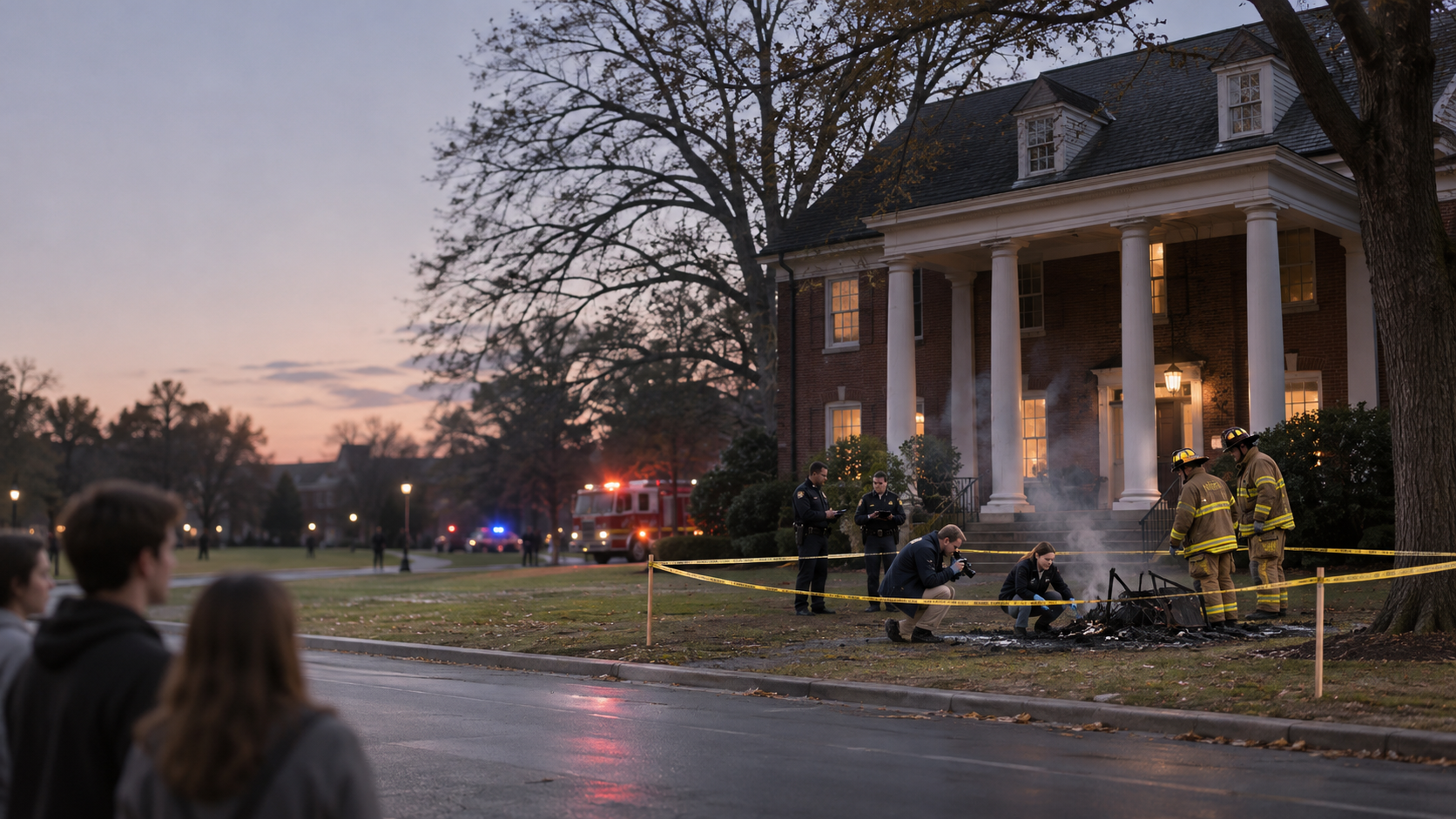
Ohio State University has suspended a fraternity while investigating a video that reportedly shows men engulfed in flames. The action followed the public circulation of the footage, but the available reporting provides few verified details about the incident.
The fraternity’s name, the identities of the people shown, the date and location, possible injuries, and the circumstances surrounding the flames have not been established in the supplied sources. The reports also do not confirm whether the incident involved hazing, alcohol, criminal conduct, or a specific university-policy violation.
The suspension is an interim university action. It does not, by itself, establish that the fraternity or any individual member violated Ohio State policy. The investigation must determine what occurred, who was involved, and whether disciplinary rules apply.
What the Video Appears to Show
Multiple reports describe footage that appears to show men engulfed in flames while other people watch. The available reports do not provide enough verified information to explain the activity or establish what happened before or after the recording.
The Independent reported that an Ohio State fraternity was suspended after a video showed men engulfed in flames. Source 1
AL.com similarly reported that Ohio State suspended a fraternity after a video appeared to show men on fire while others watched. Source 2
Those descriptions establish only what the reports say the video appears to depict. They do not prove that anyone was intentionally set on fire, that a fraternity organized the activity, or that the people shown were Ohio State students.
Why Context Matters
Short videos can omit critical information. The footage may not show:
- What happened before filming began.
- Whether the flames were controlled, accidental, or part of an activity.
- Whether the people shown consented.
- Whether someone intervened or called for emergency assistance.
- Where or when the video was recorded.
- Whether the footage was edited or reposted without its original context.
Visual material alone may not establish the identities of the people shown, their connection to Ohio State, or the fraternity’s responsibility. Investigators must authenticate the footage and determine its provenance before drawing conclusions.
Captions and social media comments require separate verification. A caption may identify a fraternity or describe an activity, but those claims do not constitute confirmation from the university, emergency services, law enforcement, or a fully sourced news report.
Confirmed Facts and Unanswered Questions
Based on the supplied reports, the confirmed information is limited:
- Ohio State suspended a fraternity.
- The university is investigating.
- The action followed a video that reportedly shows men engulfed in flames.
- The Independent and AL.com are among the referenced outlets.
The supplied reports do not establish:
- The fraternity’s name.
- The date or location of the incident.
- The identities of the people shown.
- Whether anyone was injured or received medical treatment.
- Whether the incident involved hazing or alcohol.
- Whether police, firefighters, or emergency medical personnel responded.
- Whether charges or citations were issued.
- How long the suspension will last.
- Whether the fraternity’s national organization has responded.
These gaps prevent a reliable account of the incident’s cause or consequences.
What the Suspension Means
A university may temporarily restrict a student organization while reviewing an alleged safety risk or possible policy violation. Depending on the notice, restrictions can affect events, recruitment, social activities, facility use, and campus representation.
The exact restrictions in this case have not been provided. General university practices should not be presented as confirmed conditions of Ohio State’s suspension. The official suspension notice or applicable Ohio State policy would be needed to establish its scope.
An interim suspension can allow investigators to interview witnesses, review records, authenticate video, and assess whether additional campus activities could create safety or investigative concerns.
Suspension Is Not a Final Finding
The suspension does not necessarily mean that the fraternity has been found responsible for misconduct. Interim measures and final disciplinary findings serve different purposes.
An interim measure may restrict activity while an investigation proceeds. A final decision determines whether the organization or individual students violated university policy and, if so, what sanctions apply.
Possible outcomes include:
- Continued suspension.
- Additional organizational sanctions.
- Restrictions on future activities.
- Findings against individual students.
- Reinstatement.
- Closure of the case without a confirmed violation.
The available reports do not indicate which outcome is likely. Organizational discipline also does not establish that every fraternity member participated in the conduct under review. Individual students may be assessed separately based on evidence about their actions, knowledge, or involvement.
Questions Investigators May Examine
Ohio State investigators may seek to determine:
- When and where the video was recorded.
- Whether the footage is authentic and complete.
- Whether current Ohio State students appear in the video.
- Whether fraternity members organized, encouraged, or participated in the activity.
- Whether fraternity property or an affiliated location was involved.
- Whether witnesses can explain what happened before and after the recording.
- Whether messages, additional videos, or event records corroborate the footage.
- Whether anyone required medical treatment.
- Whether university conduct, fire-safety, or hazing rules apply.
- Whether fraternity leaders knew about or supervised the activity.
These are investigative questions, not established facts about the incident.
What Remains Unknown
The Fraternity’s Identity
The supplied source summaries do not name the suspended fraternity. The organization should not be identified based on social media speculation, anonymous comments, or unrelated reports.
Reliable identification would require confirmation from Ohio State, law enforcement, the fraternity or its national organization, or a reputable news report with sufficient sourcing.
Injuries and Medical Response
The available reports do not say whether anyone was injured. That absence does not establish that there were no injuries.
Verified information could come from Ohio State, local fire officials, emergency medical services, law enforcement, or a named spokesperson. Medical information should be reported cautiously and only when publicly confirmed and relevant. Possible victims should not be identified without reliable confirmation and a clear public-interest justification.
Whether the Incident Involved Hazing
The video may raise questions about hazing, but the available sources do not establish that the incident was hazing.
Investigators would need to determine the activity’s purpose and the participants’ relationship to the fraternity. Relevant questions include whether the activity involved recruitment, initiation, membership, affiliation, group status, pressure, or coercion. Ohio State’s official policy would control any disciplinary analysis.
Dangerous conduct and hazing are not interchangeable terms. A conclusion requires evidence about the activity’s purpose and circumstances.
Police or Fire Department Involvement
The supplied reports do not identify a police investigation, fire investigation, emergency call, or criminal case.
University discipline and law-enforcement investigations are separate processes. Ohio State can suspend an organization while reviewing potential policy violations even if no criminal investigation or charges exist. Conversely, a police inquiry would not determine the university’s disciplinary outcome.
No criminal allegation should be inferred solely from the suspension.
Why Universities May Act Quickly
Universities often use interim restrictions when an allegation may involve an immediate safety concern or when unrestricted activity could interfere with an investigation.
General reasons may include preventing:
- Continued dangerous activities.
- Retaliation against witnesses.
- Destruction or alteration of evidence.
- Interference with interviews.
- Additional conduct that could create risks for students.
These are general reasons for interim measures. The supplied material does not state Ohio State’s specific reason for the suspension.
An investigation may examine both organizational conduct and individual actions. For the organization, investigators could review event planning, leadership knowledge, supervision, communications, and compliance with university rules. For individuals, they could examine participation, encouragement, recording, reporting, or intervention.
The reported video could also prompt questions about event supervision, fire safety, emergency planning, bystander intervention, and reporting responsibilities. Those questions do not establish that Ohio State or the fraternity violated a specific rule.
What to Watch for Next
A future Ohio State statement may clarify:
- The fraternity’s identity.
- The date of the suspension.
- The restrictions imposed.
- The policies under review.
- Whether the investigation remains active.
- Whether a final decision has been reached.
The fraternity or its national organization may issue a denial, apology, cooperation statement, or explanation. Any response should be presented with clear attribution and should not be treated as proof of what occurred.
Verified updates could also come from Columbus police, local fire officials, emergency medical services, or prosecutors if a criminal case is filed. Unverified claims about arrests, charges, or injuries should not be repeated.
A final disciplinary outcome may take time. Ohio State could announce policy violations, impose additional sanctions, extend the suspension, restrict activities, reinstate the fraternity, or provide limited information because of privacy requirements.
Responsible Coverage of the Video
Graphic footage should not be reproduced solely to attract attention. A factual headline and restrained description can provide relevant information without amplifying disturbing imagery.
If a publication links to the video, it should verify the material’s authenticity, explain its context, and provide a content warning where appropriate. Faces and identifying details should be blurred when privacy or safety concerns justify doing so.
Reporters should not identify students based only on social media posts. They should avoid publishing private medical information, phone numbers, addresses, or nonpublic accounts.
Verification should include checking:
- The original upload.
- The account’s ownership.
- The timestamp.
- The location.
- Signs of editing or missing footage.
- Additional recordings.
- Witness accounts.
- Official statements.
Coverage should distinguish among what the video visibly shows, what captions claim, what witnesses report, and what officials confirm. Readers with firsthand information should use appropriate university or emergency reporting channels rather than confronting people shown in the video or investigating independently.
Source Limitations
The available source set provides only a narrow account. The strongest usable points are that Ohio State suspended a fraternity, the university is investigating, and the investigation concerns a video that reportedly shows men engulfed in flames.
The supplied material references reports from The Independent and AL.com: Source 1 and Source 2.
Other entries in the source set contain unrelated labels and figures, including “cyberattack,” “jenderal polisi,” “hawks vs lakers,” “persib vs shan united,” and “weather.” They provide no corroborating information about the Ohio State investigation and cannot support additional claims.
Further reporting should verify information through Ohio State’s official communications, student-conduct policies, Columbus-area emergency agencies, and the full versions of the cited news reports.
Conclusion
Ohio State has suspended a fraternity while investigating a video that reportedly shows men engulfed in flames. That interim action is the central confirmed fact in the available reporting.
The supplied sources do not establish the fraternity’s identity, the identities of the people shown, the location or date, possible injuries, hazing, criminal conduct, or the final disciplinary outcome.
The next significant developments would be an official Ohio State statement, verified information from emergency services or law enforcement, a response from the fraternity, or a final university decision. Until those details are confirmed, the video’s context and the fraternity’s role remain unresolved.
Frequently Asked Questions
Why did Ohio State suspend the fraternity?
Ohio State reportedly suspended a fraternity while investigating a video that appears to show men engulfed in flames. The supplied reports do not state the exact policy concerns or name the fraternity.
Does the suspension prove that the fraternity violated university rules?
No. A suspension during an investigation is an interim action, not necessarily a final finding. Ohio State’s process must determine whether the organization or individual students violated university policy.
Was anyone injured?
The available source summaries do not confirm whether anyone was injured or received medical treatment. That information requires confirmation from university officials, emergency services, law enforcement, or another reliable named source.
Was the video connected to hazing?
The supplied reports do not establish that the incident involved hazing. Investigators would need to determine the activity’s purpose, the participants’ relationship to the fraternity, and whether Ohio State’s policy definitions apply.
Which fraternity was suspended?
The supplied source material does not identify the fraternity. It should not be named until Ohio State or a reputable, fully sourced report confirms its identity.
What happens next?
Investigators may authenticate the video, identify the people involved, interview witnesses, review communications, and assess possible policy violations. Ohio State may continue the suspension, impose additional sanctions, reinstate the organization, or release limited information because of privacy requirements.
Artikel Terkait
-
 Iran Allegedly Hacked French Supermarket Refrigerators
-
 Megyn Kelly and Elon Musk Criticize Russell Brand Case
-
 Ukraine Peace Talks Resume in Abu Dhabi
-
 Pope Urges Argentina to Protect Vulnerable People
-
 California Voters Reject Proposition 40 Billionaire Tax
-
 Ohio State Investigates Fraternity Over Viral Fire Video