Artemis II Ionospheres Disturbance: What Evidence Shows
Artemis II and the Ionosphere: What the Evidence Shows
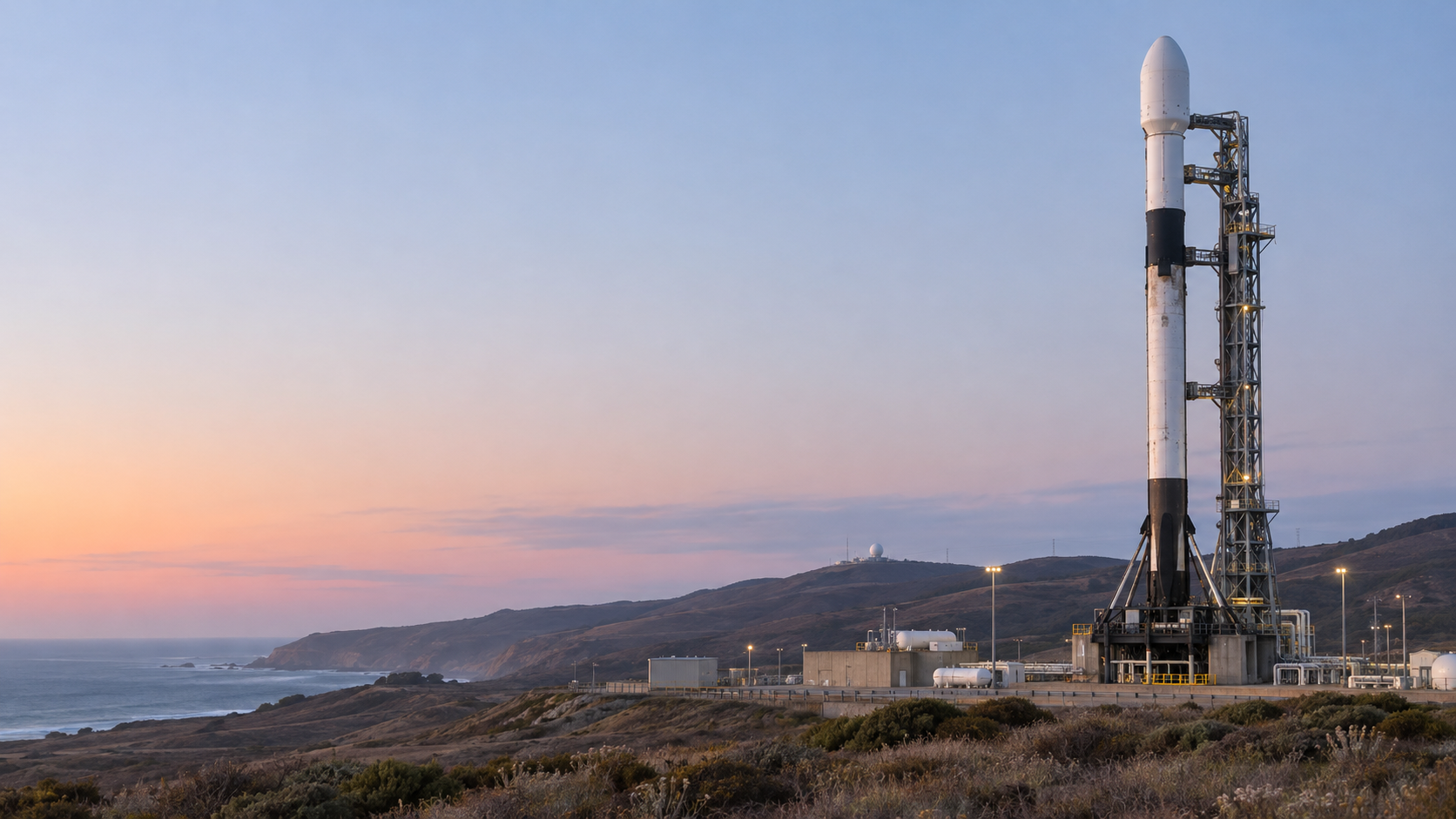
Reports linking NASA’s Artemis II launch to large disturbances in Earth’s ionosphere have attracted attention because the ionosphere affects GPS, satellite communications and radio signals.
A GPS-based study reportedly identified two broad ionospheric disturbances after the launch, with each measuring approximately 5,000 kilometers across Source 7. The phrase “tore holes into the ionosphere” is dramatic, but it can mislead. In this context, a “hole” means a temporary reduction or disruption in electron density, not a permanent opening in the atmosphere.
The available summaries support a limited conclusion: Artemis II was reportedly associated with two large, temporary ionospheric disturbances. They do not establish permanent atmospheric damage, a global GPS outage or confirmed autonomous-vehicle failures.
What Is the Ionosphere?
The ionosphere is a region of Earth’s upper atmosphere containing free electrons and ions. It overlaps parts of the mesosphere, thermosphere and exosphere rather than forming a sharply defined layer. Its condition varies with solar radiation, atmospheric motion, altitude and geomagnetic activity.
The ionosphere affects radio-wave propagation and satellite-navigation signals. GPS signals pass through it before reaching ground receivers, and charged particles can alter their speed and path. The main measurable effect is a change in total electron content, or TEC—the number of free electrons along a signal’s route.
Most GPS systems compensate for ordinary ionospheric variation through correction models, multiple frequencies and regional services. Rapid or unusual changes can reduce positioning accuracy, increase uncertainty or complicate signal processing. They do not necessarily make every receiver stop working.
How a Rocket Can Disturb the Ionosphere
Rocket exhaust can contain water vapor, carbon dioxide and other compounds. At high altitude, these materials can alter the chemical and electrical environment. Water vapor is especially relevant because it can participate in reactions that remove or redistribute free electrons.
The size and duration of a disturbance depend on several factors:
- Rocket size and propellant load.
- Exhaust composition.
- The altitude at which fuel is burned.
- Launch direction and trajectory.
- Upper-atmosphere winds.
- Time of day.
- Solar and geomagnetic conditions.
- Background electron density.
A larger rocket can release more exhaust, but rocket size alone does not determine the final effect. Atmospheric conditions can amplify, reduce or reshape the response.
What the Reported Study Found
GPS networks can act as atmospheric sensors. Researchers compare signal timing and phase across many ground stations to estimate changes in TEC. A network can show whether an anomaly is local, regional or spread over a much wider area.
The reported finding was that the Artemis II launch produced two broad ionospheric disturbances. Source 7 gives an approximate width of 5,000 kilometers for each Source 7. Another summary describes them as “continent-sized” Source 1.
The reported width describes the approximate geographic footprint of the anomaly. It does not mean that every location experienced identical conditions or the same degree of GPS degradation. Geographic size and operational severity are separate measurements.
Could the Disturbance Affect GPS?
Ionospheric changes can affect GPS when conditions evolve faster than correction systems can model them. Possible effects include:
- Reduced positioning accuracy.
- Greater uncertainty in location estimates.
- More complex signal processing.
- Difficulty maintaining reliable navigation.
- Problems for applications requiring centimeter-level precision.
The supplied summaries do not establish a universal GPS outage. One report describes disrupted GPS signals, but it does not provide maximum positioning errors, the number of affected receivers or the duration of user-level disruption Source 5.
Implications for Autonomous Vehicles
One report suggests that navigation changes could complicate self-driving-car localization Source 1. This is a potential technical concern, not a documented Artemis II-related vehicle failure.
Autonomous vehicles typically combine satellite positioning with cameras, radar, LiDAR, inertial measurement units and high-definition maps. A temporary GPS disturbance alone would not necessarily cause a vehicle to fail. Risk would increase if other sensors were obstructed, correction services were unavailable or highly precise positioning were essential.
The same principle applies to aviation, maritime navigation, surveying, precision agriculture and timing systems. Effects depend on signal conditions, receiver design, correction methods and location.
What the Evidence Does Not Establish
The available summaries do not show:
- Permanent atmospheric destruction.
- Ozone-layer depletion or climate damage.
- A global GPS shutdown.
- Confirmed autonomous-vehicle crashes or failures.
- A uniquely dangerous long-term trend.
The reported phenomenon concerns temporary changes in charged-particle conditions. It is not equivalent to permanent atmospheric pollution, ozone depletion or climate change.
A complete assessment would require the study’s methodology, publication details, exact launch conditions, disturbance duration, signal amplitude, error margins and comparisons with natural ionospheric events. Stronger attribution would combine GPS-derived TEC data with satellite observations, ionosonde measurements, radar, space-weather indices and atmospheric models.
Why the Finding Matters
The reported event may be scientifically important because it shows that a major launch can produce measurable, wide-area changes in near-Earth space. Such observations can improve models of rocket exhaust, ionospheric chemistry and navigation risk.
Practical significance depends on magnitude and duration. Systems requiring precise positioning or timing may benefit from additional resilience, including multi-frequency receivers, local correction services, inertial navigation and independent sensors.
Future launches should include coordinated ionospheric monitoring before, during and after liftoff. Accurate information about a disturbance’s location, duration and signal impact is more useful than broad claims of global GPS failure.
Conclusion
The reported evidence indicates that Artemis II was associated with two broad, temporary ionospheric disturbances. Source 7 estimates that each was approximately 5,000 kilometers wide Source 7.
These disturbances could alter GPS signal propagation because electron density affects radio signals. However, the summaries do not demonstrate permanent atmospheric damage, a global GPS outage or confirmed autonomous-vehicle failures.
The broader lesson is practical: as rockets become more powerful and launches become more frequent, better monitoring can improve navigation forecasts and system resilience without turning a temporary ionospheric response into an atmospheric catastrophe.
Frequently Asked Questions
Did Artemis II Permanently Damage Earth’s Atmosphere?
No. The supplied summaries describe a temporary ionospheric disturbance, not permanent atmospheric damage.
What Does “Tore a Hole” in the Ionosphere Mean?
It describes a temporary reduction or disruption in electron density. It does not mean that the atmosphere developed a permanent physical opening.
How Large Were the Disturbances?
Source 7 reports two disturbances, each approximately 5,000 kilometers wide Source 7. The figure refers to the approximate affected region, not uniform disruption throughout it.
Did Artemis II Stop GPS From Working?
No broad GPS shutdown is established by the supplied summaries. They indicate altered signal conditions but do not quantify widespread user-level failures.
Could the Effect Affect Self-Driving Cars?
Potentially, because autonomous vehicles may use satellite positioning. However, most also use cameras, radar, LiDAR and inertial sensors, so a temporary GPS disturbance would not automatically cause a failure.
Is This Effect Unique to Artemis II?
No. Powerful rocket launches can interact with the upper atmosphere and ionosphere. Artemis II is notable because its large launch vehicle and reported GPS-based measurements made the effect especially visible.